Makibaka! Huwag matakot!
Makibaka! - “fight!”
Huwag matakot! - “don’t be afraid!”
This was the battlecry of the Filipino youth-led movement against the fascist Marcos dictatorship in the 1970s-1980s.
A chant leader yells, “makibaka!” and the masses respond, “huwag matakot!”
It is still used today by Filipino activists in the Philippines and in the diaspora.
These photographs document New York activists in the Filipino national democratic movement, which is a broad-based alliance of organizations fighting for true Philippine sovereignty. Only when feudalism, bureaucrat capitalism, and US imperialism fall in the Philippines can the Philippines truly be free.

Makibaka, 2019
A Filipina holds a fan that says, "makibaka” - which translates to, “fight!” or “struggle!” in Tagalog.
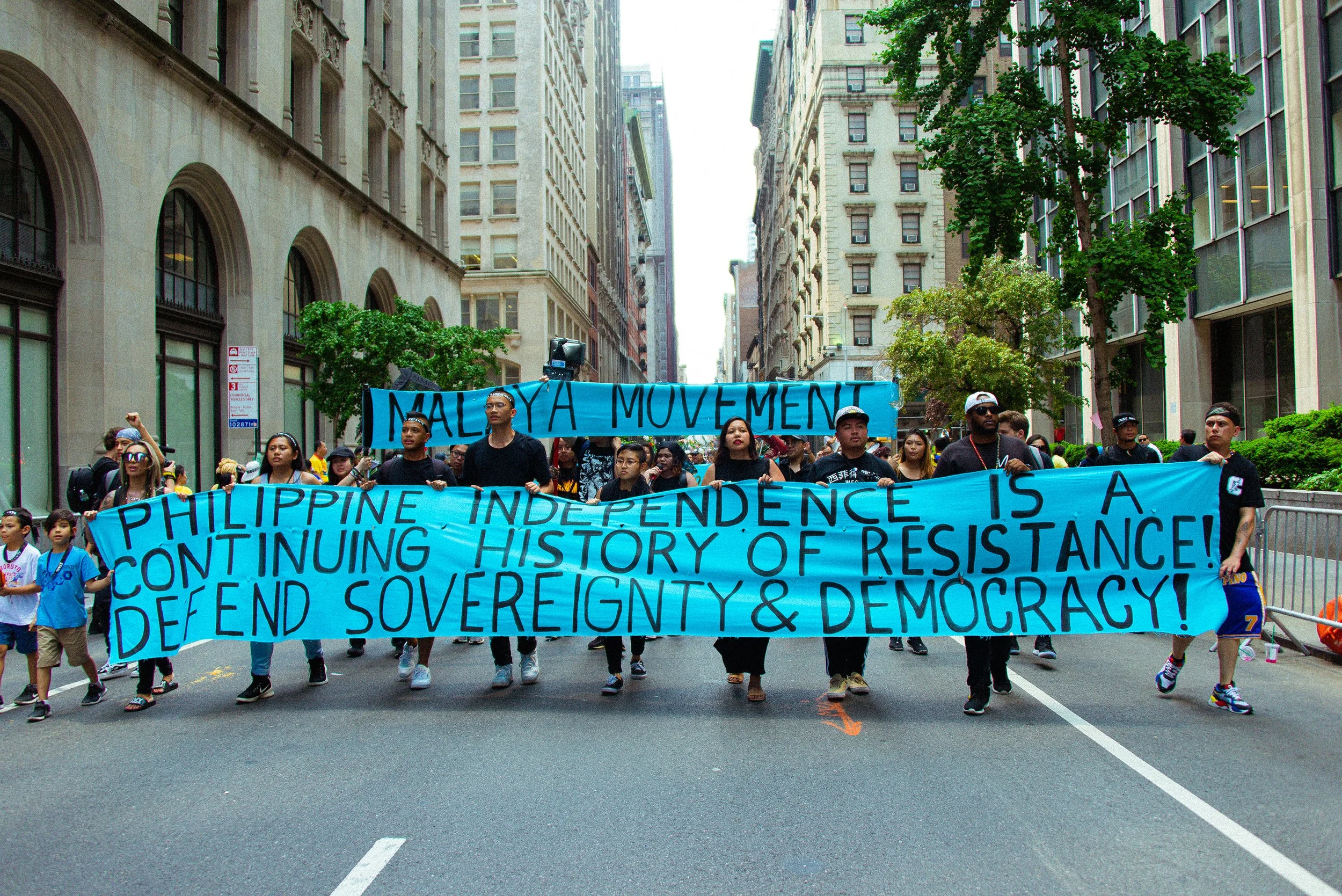
Philippine Independence Day Parade, 2019
Filipino activists march down 5th Ave. for the Philippine Independence Day Celebration. The New York parade is the largest Philippine Independence Day celebration outside of the Philippines.
September 20, 2022:
50th Anniversary of Martial Law aka ML50
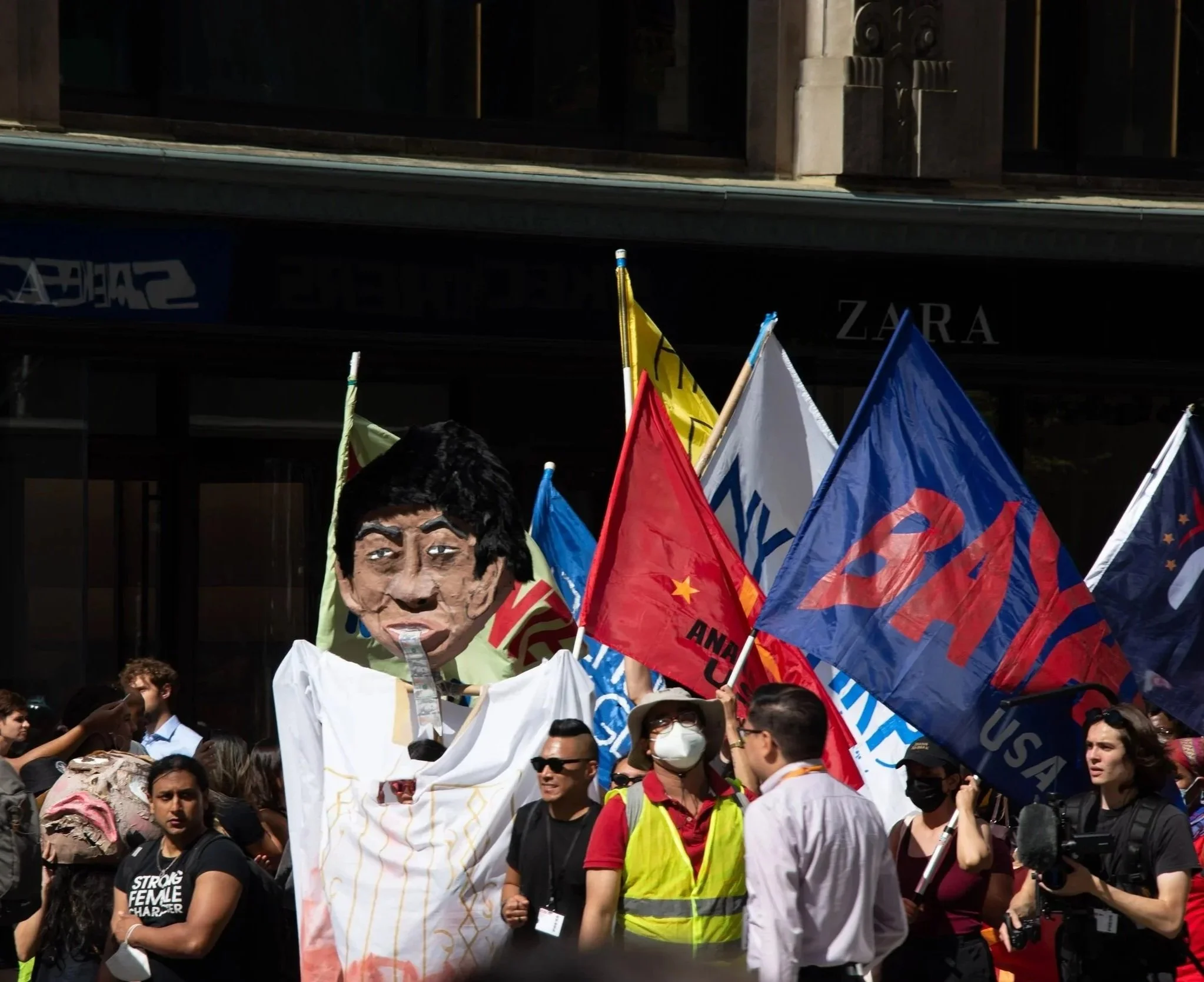
On the 50th anniversary of martial law, President Ferdinand Marcos, Jr. dared to show his face in New York. Hundreds of Filipinos from across the Northeast marched to the United Nations to confront Bong Bong Marcos for the the human rights violations done by him and his family.
Infamous for their effigies, Filipino activists created a Marcos Jr. effigy with US dollar bills as his snake-tongue. The dollars represent how Marcos is in New York to sell the Philippines to the highest bidder. He is trailed by the flags of various Filipino organizations.


Calls
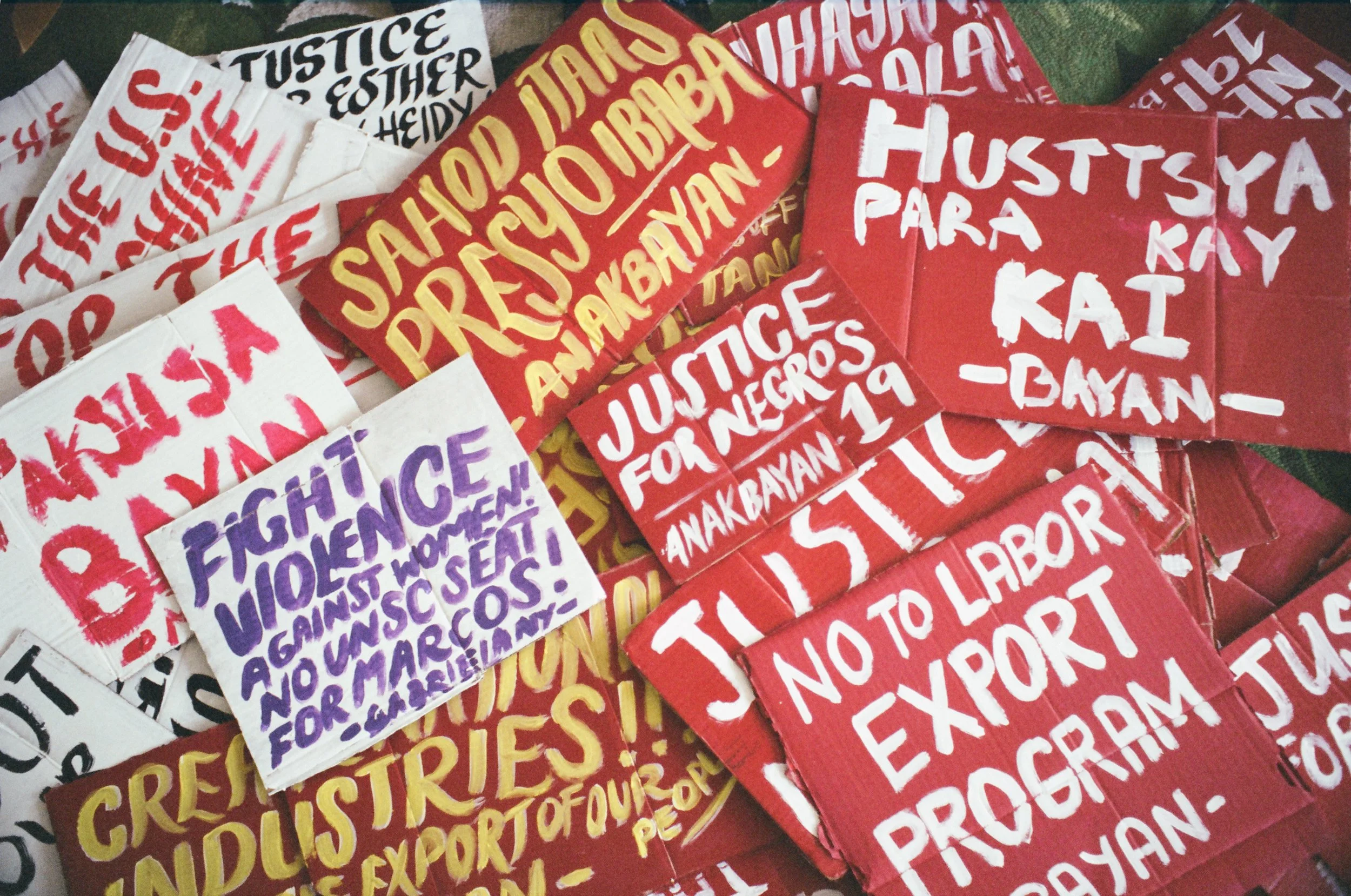
What gets written on a placard is a “call.”
Before any action, calls are decided by the collective in order to ensure our messages align with the movement for national democracy in the Philippines.
(top to bottom)
1. ”Defeat Duterte-Marcos” - during Philippine election season, 2022
2. Various placards, 2026
3. ”Reject BongBong Marcos” - during Philippine election season, 2022

Kalay in front of the Philippine Consulate, 2022.


Gatch singing the Philippine national anthem, 2022.

Stop the Killings in the Philippines!, 2020
A coffin is painted with the names of those slain during Duterte’s fascist regime.
”STOP THE KILLINGS!” is painted on the top of the coffin. Placards calling for JUSTICE with pictures and names of those who have died are placed in front of the coffin like a shrine.

Wall of Martyrs, 2022
A wall of martyrs assembles in front of the United Nations while Marcos Jr. gives a speech behind the walls of the institution. These are faces of those who disappeared or died during the fascist regime of his father, Ferdinand Marcos, in the 1970s and 1980s. Many of those slain were Filipino youths.
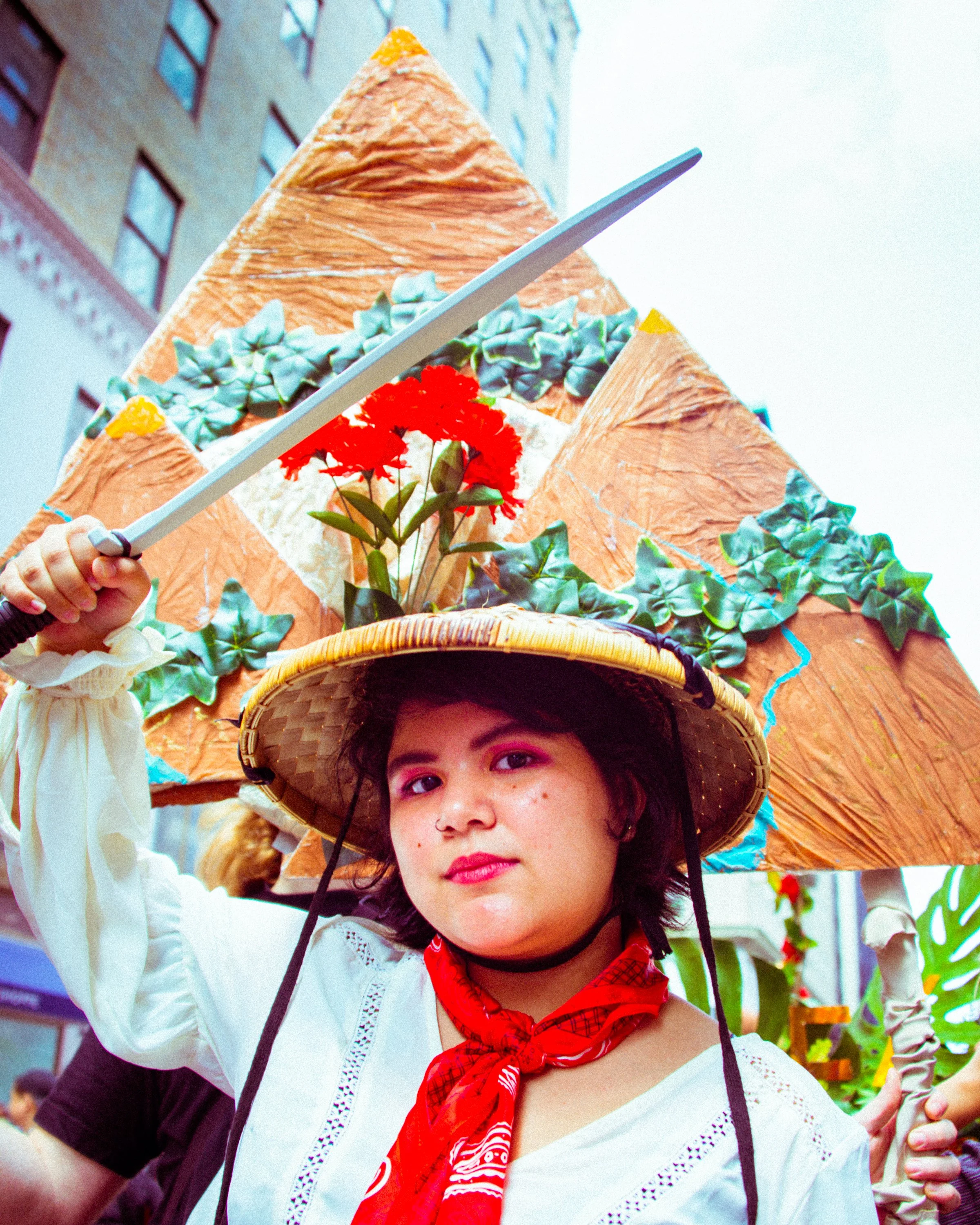
Tatsulok, 2019
A Filipino youth is dressed as a peasant farmer. Peasants make up 75% of the population of the Philippines. They live are farmers who do not own the land or crops that they till. They are the poorest and most marginalized sector of Philippine class society.
Behind her are 3 mountains, which symbolize the three basic problems of the Filipino people: imperialism, feudalism, and bureaucrat capitalism.

Reina of Labor Export Policy, 2019
A Filipina migrant is dressed as the Reina of The Labor Export Policy.
The Labor Export Policy started in 1970s by Dictator Ferdinand Marcos and enables and promotes the emigration of Filipino people to enter the global labor force.
Every single day, 10,000 Filipinos leave the Philippines to find work abroad. Filipino labor is the #1 export of the Philippines and in 2021, remittances accounted for 9% of the Philippines’s GDP. Filipinos abroad are met with unsafe and unfair work conditions, extreme exploitation, and are left unprotected and abandoned by the state.
On the top of her head, she wears a balikbayan box crown. The balikbayan box is an icon for Overseas Filipino Workers (OFWs) because when OFWs return home to the Philippines to visit their families, they bring back boxes full of gifts. “Balikbayan box” translates to “returning home box"."
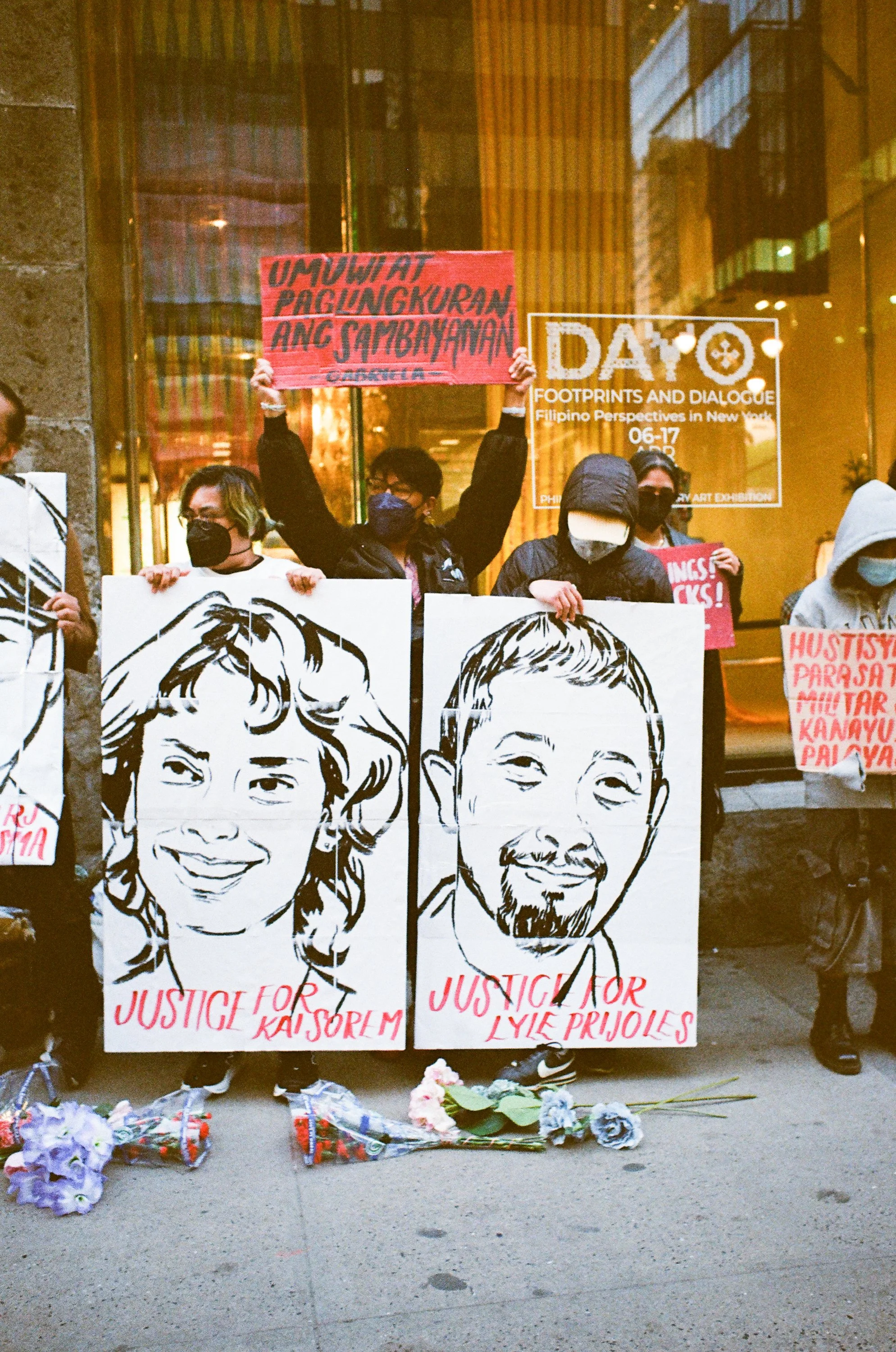
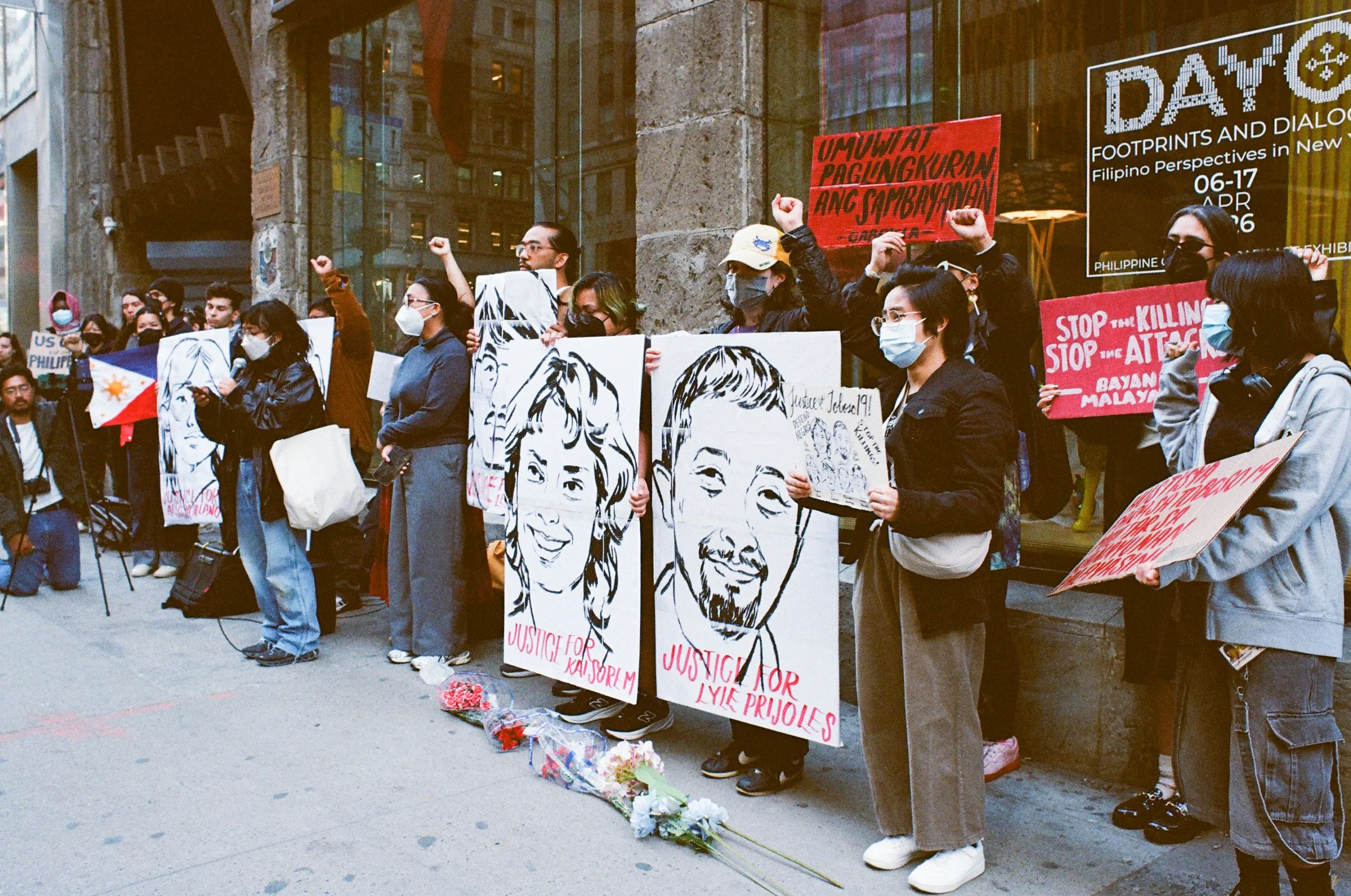
Justice for Negros 19, 2026
Community members hold a vigil in front of the Philippine Consulate for the Negros 19, who were 19 Filipinos who were massacred by the Armed Forces of the Philippines in Toboso, Negros Occidental on April 19, 2026. Among the 19 who were killed were two Filipino-American community organizers who were working to help farmers and farm workers in Negros.
Negros is the country’s sugar bowl. In 2018, the island produced 63% of the country’s raw sugar, but the farmers in the area are the Philippines’s poorest peasantry. They receive the lowest wage rates, no benefits, seasonal unemployment, and rampant landlessness. In their fight for their land and better working conditions, the peasants are met with violence from the barons, landlords, and Philippine military.
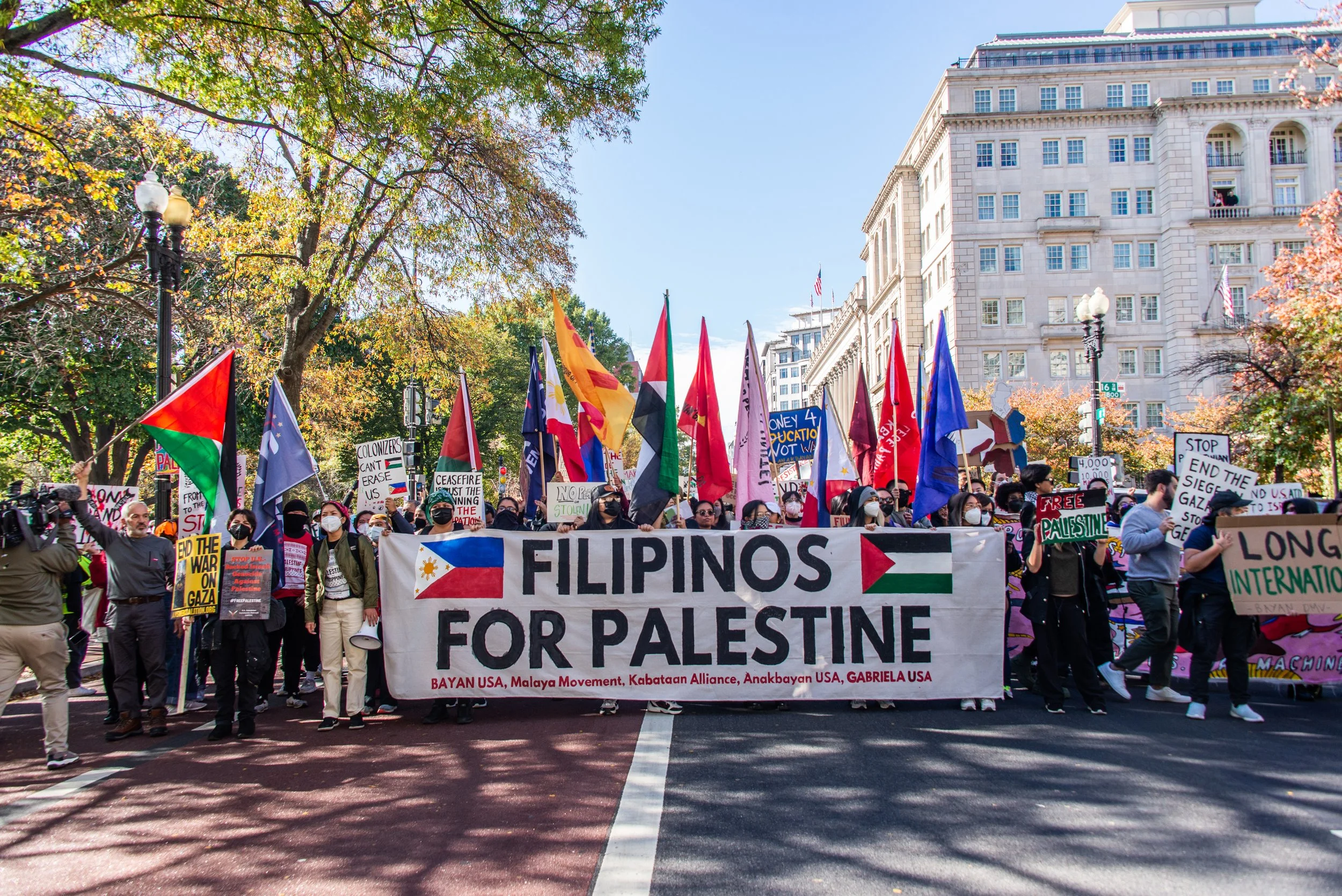
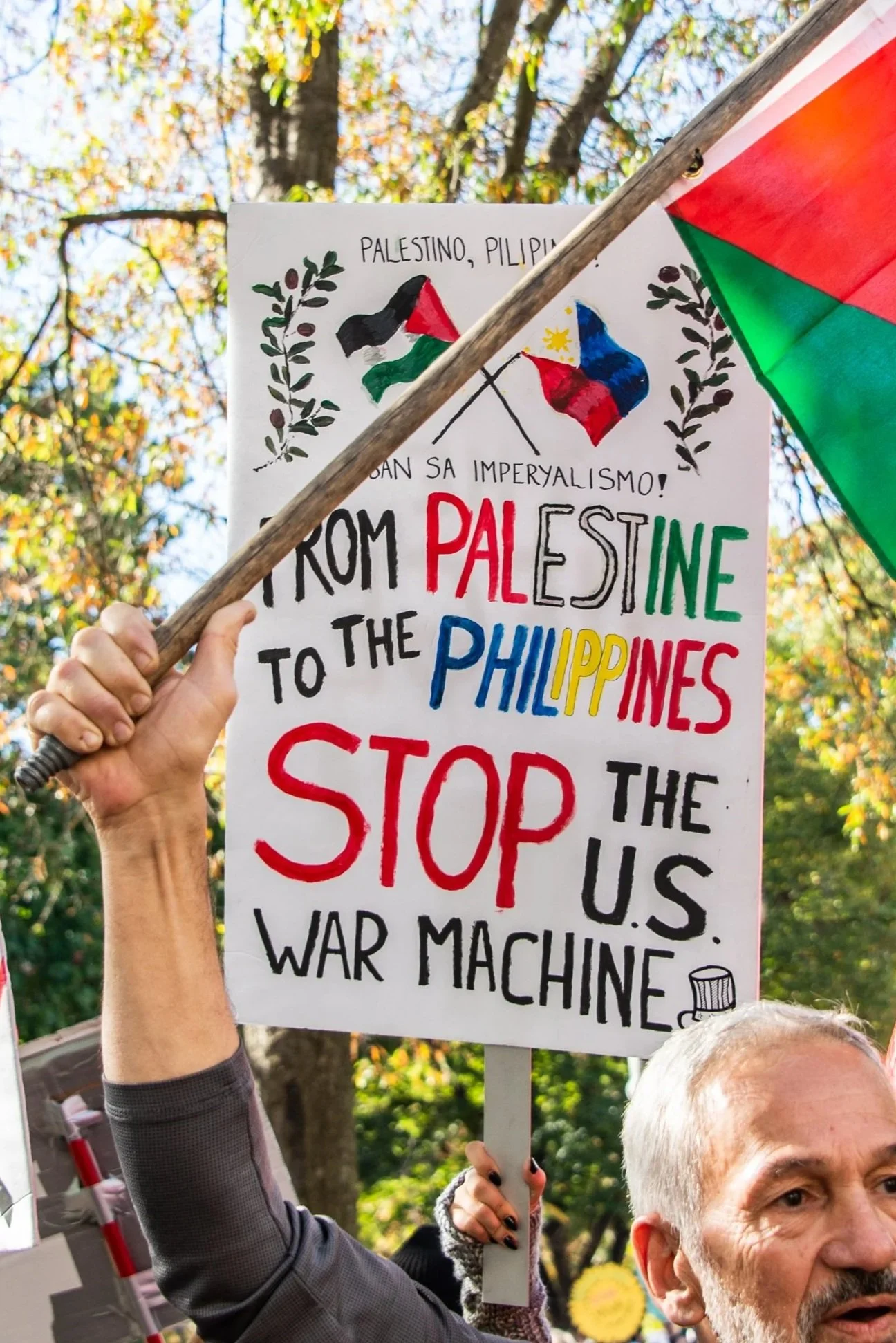
From Palestine to the Philippines, 2023
Filipinos join a protest in Washington DC to denounce the genocide in Gaza and support the Palestinian resistance. Filipinos and Palestinians share the common enemy of U.S. Imperialism as their people feel the violence caused by the U.S. war machine in their respective countries.
Because of the Visiting Forces Agreement, the U.S. is allowed to have military bases in the Philippines without any payment of rent. Currently, the U.S. has 9 active military bases that displace locals, pollute the environment, and endanger locals during military exercises. Sex trafficking and exploitation increases in the presence of military bases. In 2014, a Filipina trans woman was killed by U.S. Marine Joseph Scott Pemberton and her family has never received justice for her murder.
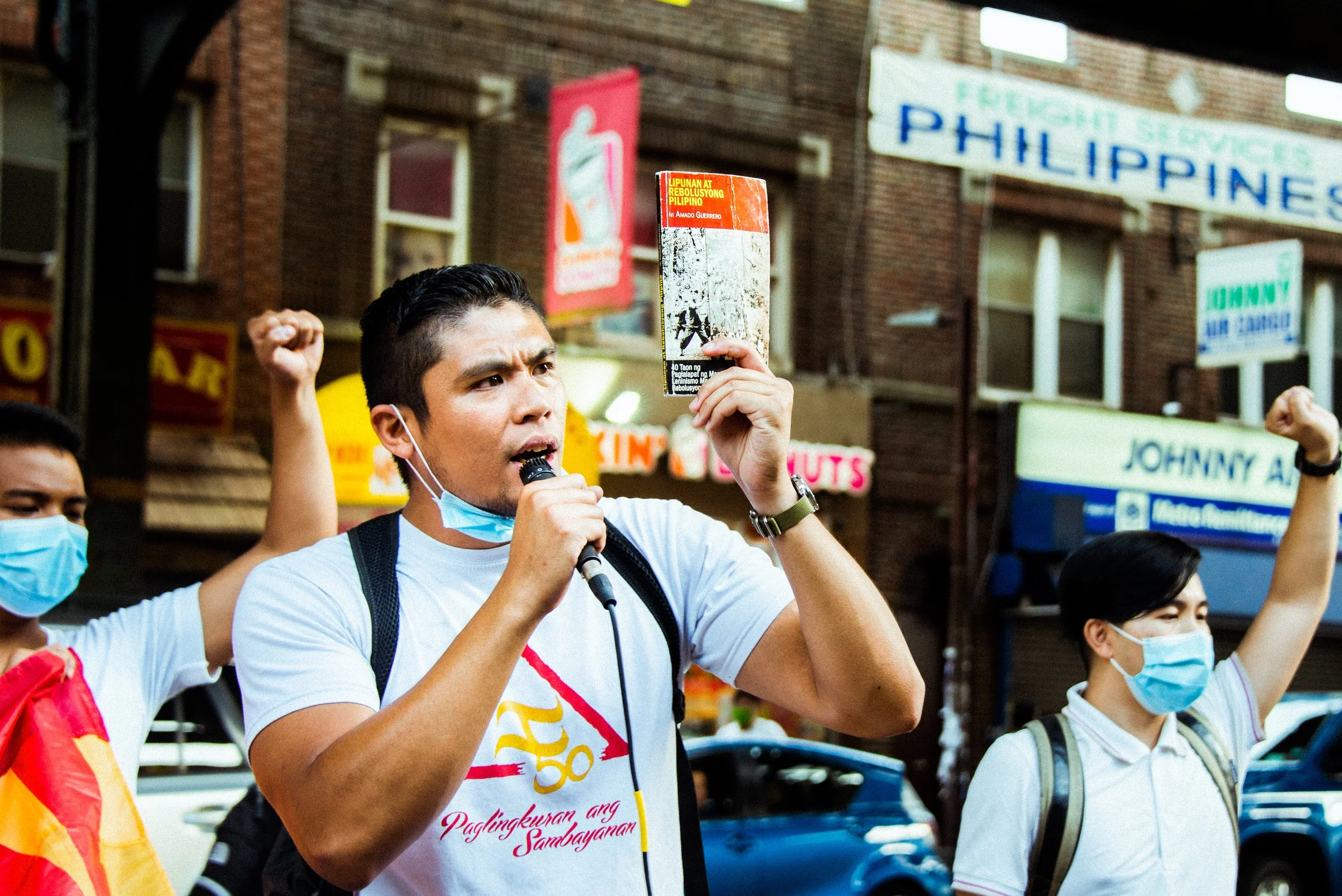
Lipunan at Rebolusyong Pilipino, 2020
An activist holds Lipunan at Rebolusyong Pilipino, or, Philippines Society and Revolution (PSR), a seminal text for the national democratic movement of the Philippines. It outlines the three-basic problems of the Philippines and provides a history of the Philippines told from the people’s lens.

Melissa as Gabriela Silang, 2019
Gabriela Silang is the champion for the women’s sector in the national democratic movement. She was a fearless Filipino military leader who led the Ilocano Independence Movement from Spain in 1763.
Vigil for Democracy, 2022
On election day 2022, one hundred Filipinos gathered in front of the Philippine Consulate in NYC to hold a vigil for democracy due to the fraudulent “victory” of BongBong Marcos. It was an intergenerational show of support and some of the Filipinos who participated were survivors of martial law era.

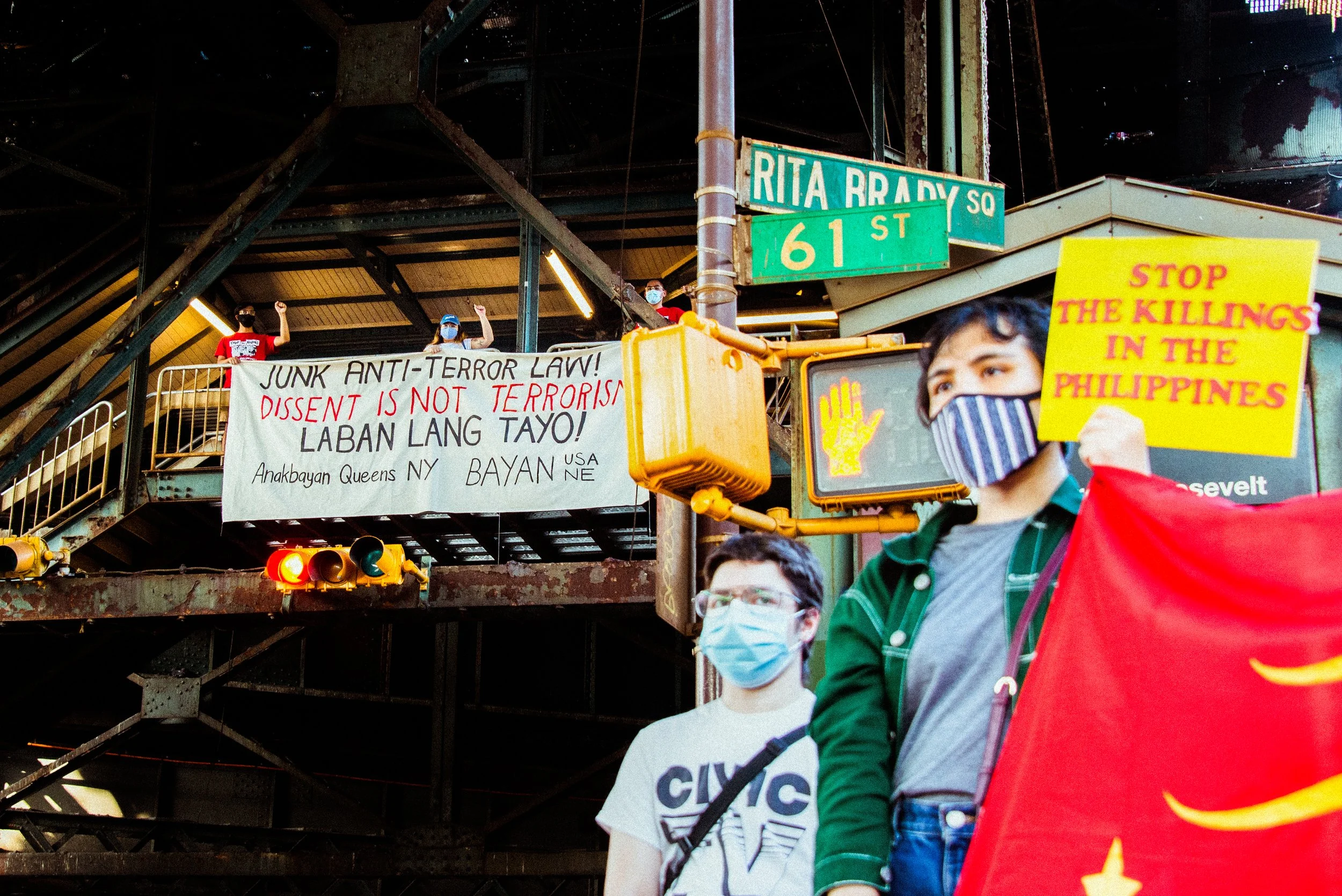
Banner Drop at Woodside Station, 2020.
Members of Anakbayan Queens hold a banner drop at the Woodside train station in Woodside, AKA Little Manila, Queens. Anakbayan translates to “children of the country,” and members represent the youth sector of the Filipino national democratic movement.
Banner drops are relatively high-risk actions, as they have high visibility in public spaces so interactions with the police are likely. Activists held this action in Woodside, a city that is home to many immigrant Filipinos, to protest Duterte’s Anti-terror Law, which is legislation that deems activists as terrorists and allows for state-sanctioned violence against human rights defenders and any civilians who critique the government.